


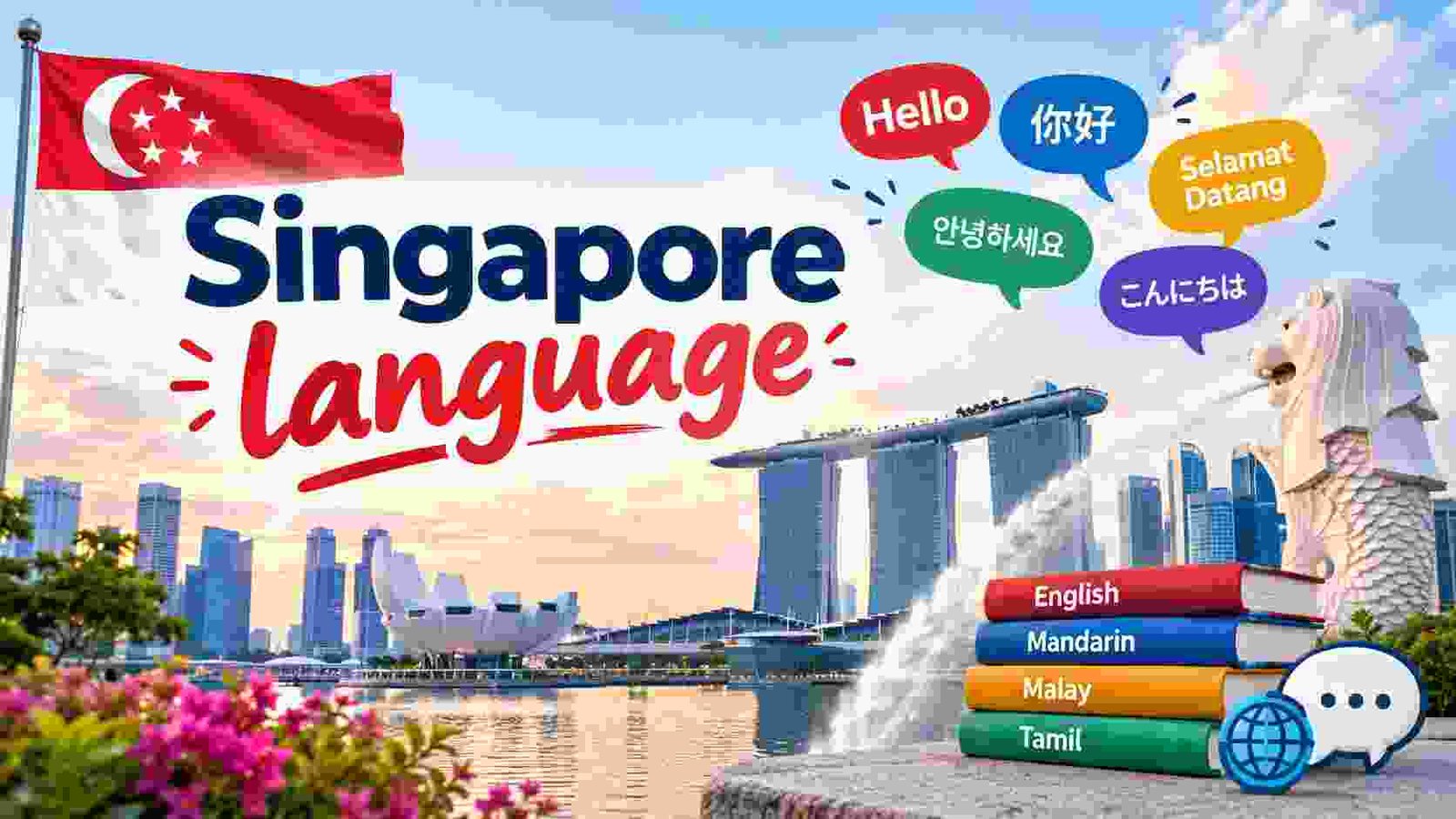
When people search for Singapore language, they often expect one simple answer. Singapore does not have just one language. It has four official languages: English, Malay, Mandarin, and Tamil. Each language has an important place in the country’s history and culture. English is widely used in schools, offices, government services, and business. Malay has a special national role and is the national language. Mandarin is common among many Chinese Singaporeans. Tamil is widely used within the Tamil-speaking community. This mix makes Singapore different from many countries. You can hear several languages during one short walk through a neighborhood. The language people use can also change based on family, school, work, or social setting. Understanding this language mix makes travel easier. It also gives visitors a better view of Singapore’s multicultural identity.
What Is Singapore Language?
People often ask, what is Singapore language when they first learn about the country. The simple answer is that Singapore is multilingual. There are four official languages, and each has a different role. English is the main working language across the country. Malay is the national language. Mandarin and Tamil are also official languages. This system reflects Singapore’s diverse population and history. It also helps different communities keep connections with their cultural roots. Singapore does not expect everyone to use only one language. Instead, people often move between languages depending on the situation. A person may speak English at work, Mandarin with family, and Singlish with friends. This flexible approach is a normal part of daily life. For visitors, English is usually the easiest language to use. It is widely understood in tourist areas, shops, hotels, and public services.
What Are the Official Singapore Languages?
The official Singapore language system includes four languages: English, Malay, Mandarin, and Tamil. These languages are recognized by the Singapore government and have important cultural roles. English is the most widely used language in administration, education, and business. The national language is Malay. Mandarin is connected strongly with Singapore’s Chinese community. Tamil has a long history within the Indian community and remains an important community language. The four-language system helps represent the country’s different cultural groups. It also supports communication in a modern and diverse society. Singapore’s language policy is closely connected with its multicultural approach. Schools also use English as the main teaching language while students generally learn a second official language. This creates a population that can often communicate across cultural groups while still maintaining links to family languages and traditions.
| Language | Status | Common Use | Key Role |
| English | Official | Schools, business, government | Main working language |
| Malay | Official | Culture, community, national ceremonies | National language |
| Mandarin | Official | Chinese community, homes, media | Major community language |
| Tamil | Official | Indian community, homes, media | Major Indian language |
| Singlish | Informal variety | Casual conversations | Local speech style |
What Makes English So Popular in Singapore?
English has a major role in Singapore’s modern society. Many people use it at school, work, and in public places. It is also the main language used in government communication and business. This makes English especially useful for visitors. You can usually communicate in English at airports, restaurants, shopping centers, hotels, and tourist attractions. Singapore’s education system also gives English a central role. Students generally learn academic subjects in English. They also study a second official language. This approach helps young people communicate with people from different backgrounds. English also connects Singapore with international business and global markets. However, Singaporean English does not always sound exactly like British or American English. Local speech can include words, expressions, and sentence patterns influenced by other languages. This local style is commonly called Singlish. It gives everyday conversations a distinctly Singaporean character.
What Is Singlish?
Singlish is one of the most interesting parts of Singapore language culture. It is an informal way of speaking English that developed through Singapore’s multilingual society. Singlish can include words and sentence patterns influenced by Malay, Mandarin, Tamil, Hokkien, Cantonese, and other languages. You may hear short expressions such as “lah” at the end of a sentence. The meaning often depends on the situation and tone. Singlish is common in casual conversations between locals. It differs from the standard English used in official correspondence, commercial papers, and educational settings. Many Singaporeans can easily switch between standard English and Singlish. This ability is called code-switching. A person might use formal English during a meeting and Singlish with close friends. For visitors, standard English is usually enough. You do not need to learn Singlish before visiting Singapore. However, learning a few local expressions can make conversations more fun.
How Do You Say Hello in Singapore Language?
There is no single phrase for hello in Singapore language because Singapore has several official languages. In English, you can simply say “Hello” or “Hi.” pagi” means good morning. In Tamil, “Vanakkam” is a traditional greeting. The greeting you choose can depend on the person and setting. English is normally the safest option when you are unsure. Singaporeans are used to hearing different languages and accents. A simple friendly greeting is usually appreciated. You may also hear people use informal English when greeting friends. Language choice can show respect for someone’s cultural background. Still, visitors should not feel nervous about making mistakes. Singapore is a very international place. A friendly smile and polite greeting often matter more than perfect pronunciation.
What Singapore Language Is Used at Home?
The answer to what singapore language people use at home depends on their family background. Some households mainly use English. Mandarin, Malay, Tamil, or another Chinese or Indian language may be used by others. Some families use more than one language every day. In a multicultural nation, this is typical. Parents may speak one language with grandparents and another with children. Children may also answer in English even when another language is spoken at home. Singapore’s population includes people from many cultural backgrounds. Therefore, there is no single home-language pattern. The country’s language environment can change from one family to another. This is one reason Singapore is interesting for language learners. A person can grow up hearing several languages regularly. The ability to move between languages can be useful at school, work, and in social situations. Additionally, it aids in the generational preservation of cultural customs.
Is Malay Singapore’s national language?
Indeed, Singapore’s national language is Malay. This is an important detail when discussing the official Singapore language system. Malay has historical significance in Singapore and the wider region. The national anthem, “Majulah Singapura,” is written in Malay. Malay is also used in certain national and ceremonial contexts. However, English is much more common in everyday government, education, and business communication. This can sometimes confuse visitors. They can assume that the national language will be spoken everyplace. Singapore’s system works differently. Malay keeps its national and historical status while English serves as the main working language. This arrangement reflects Singapore’s history and multicultural society. Malay remains an important part of national identity. Visitors can also find Malay widely used within Singapore’s Malay community. Learning a simple Malay greeting can therefore be a nice way to connect with local culture.
Is Mandarin Spoken in Singapore?
One of the four official languages of Singapore is Mandarin. Members of the Chinese Singaporean community utilize it extensively. English is also the primary language of many people. Mandarin can be heard at home, in community settings, on television, and in other forms of media. According to Singapore’s official language policy, Mandarin is the primary Chinese language. However, Singapore has many Chinese dialect traditions too. Languages like Hokkien, Teochew, Cantonese, or Hakka may be spoken by older generations. These languages have played an important role in Singapore’s history. Their everyday use varies between families and generations. Younger Singaporeans may understand a traditional dialect but use English or Mandarin more often. This shows how language changes over time. The official language system and actual daily speech are not always exactly the same.
Is Tamil an Official Language in Singapore?
Tamil is another official language in Singapore. It has a strong connection with Singapore’s Indian community and has been part of the country’s linguistic history for many years. Tamil is used in homes, religious settings, community activities, media, and education. Singapore also has Tamil-language newspapers and broadcasting. Not every Indian Singaporean speaks Tamil, however. Singapore’s Indian population includes people with many different language backgrounds. In these communities, English is also frequently spoken. Tamil’s official status helps preserve its cultural and historical importance. It also gives Tamil speakers access to education and public communication in their language. For visitors, the word “Vanakkam” is a useful Tamil greeting to recognize. Like other languages in Singapore, Tamil exists alongside English and other community languages. This creates a language environment where cultural identity and modern communication work together.
What Language Is Used in Singapore Schools?
One of the main reasons English is so crucial in Singapore is education. In schools, English is typically the primary language of instruction. Students also study a second official language as part of the education system. Chinese students commonly study Mandarin. Malay students commonly study Malay. Indian students may study Tamil or another approved language, depending on their circumstances. This system gives students strong exposure to more than one language. Additionally, it facilitates communication between various populations. A student can learn science and mathematics in English while studying another language separately. This balance supports both global communication and cultural identity. Language education is one of the key reasons Singapore has a highly multilingual population. It also means that many young Singaporeans can move comfortably between formal English and another language. The exact language abilities of each person still vary based on family and personal experience.
Why Does Singapore Have So Many Languages?
Singapore’s multilingual environment comes from its history and population. The country developed as an important trading center. People from different parts of Asia settled there over many generations. Chinese, Malay, Indian, and European influences all became part of Singapore’s society. Different communities brought their own languages and traditions. Over time, Singapore developed a national system that recognized four official languages. English was chosen as the main working language because it could connect different communities without giving one local ethnic language dominance. Malay retained national-language status because of its historical importance. Mandarin and Tamil were included to represent major cultural communities. This system helped support social unity while preserving cultural identity. Today, Singapore’s streets, schools, restaurants, media, and homes show this history. A visitor can experience this diversity without traveling far. That is among the aspects of Singaporean culture that people remember the most.
Singapore Language Facts at a Glance
The Singapore language landscape can seem complicated at first. However, the basic facts are easy to remember. Singapore has four official languages: English, Malay, Mandarin, and Tamil. Malay is the national language. English is the main working language. Mandarin and Tamil have important community roles. Singlish is an informal local variety of English. Many people are multilingual and may switch between languages based on the context. English is generally the easiest choice for international visitors. These facts provide a simple starting point for understanding communication in Singapore. Language is not only about words. It is also connected with history, culture, education, and identity. That is especially clear in Singapore. The country’s language system was designed to support both unity and diversity. Understanding these basic facts can help travelers, students, and business visitors communicate with greater confidence.
| Question | Simple Answer |
| How many official languages? | Four |
| What are they? | English, Malay, Mandarin, Tamil |
| National language? | Malay |
| Main working language? | English |
| Common local English variety? | Singlish |
| Common Chinese official language? | Mandarin |
| Official Indian language? | Tamil |
| Best language for tourists? | English |
| National anthem language? | Malay |
| Is Singapore multilingual? | Yes |
Frequently Asked Questions About Singapore Language
1. What is Singapore language?
Singapore does not have just one language. It has four official languages: English, Malay, Mandarin, and Tamil. English is the main working language. Malay is the national language. Mandarin and Tamil have important cultural and community roles.
2. What is the official Singapore language?
There are four official languages in Singapore. They are Tamil, Mandarin, Malay, and English. English is mainly used for government, education, business, and wider communication. The unique status of national language belongs to Malay.
3. What language do Singaporeans speak?
Singaporeans speak different languages based on their families and communities. English is widely spoken. Many people also speak Mandarin, Malay, Tamil, or another home language. Some Singaporeans regularly use two or more languages.
4. How do you greet someone in Singaporean?
There are several ways to say hello. English speakers can say “Hello” or “Hi.” Mandarin speakers can say “Nǐ hǎo.” Malay speakers may use “Helo.” Tamil speakers can say “Vanakkam.” English is a safe choice for visitors.
5. Is English Singapore’s official language?
No. Malay is Singapore’s national language. English is the primary working language and is extensively utilized in industry, government, and education. This difference is an important part of understanding Singapore’s language system.
6. Is Singlish an official language?
No. Singlish is not an official language. It is an informal local variety of English. It contains influences from several languages and is common in casual conversations. Formal settings usually use standard English.
Conclusion
The Singapore language system is a great example of how different cultures can share one country. Singapore has four official languages: English, Malay, Mandarin, and Tamil. Malay is the national language, while English is the primary working language. Mandarin and Tamil remain important community languages. Singlish adds another unique layer to everyday conversations. For visitors, English is usually enough for most situations. Still, learning a simple greeting in Malay, Mandarin, or Tamil can make a visit more enjoyable. Language in Singapore is closely tied to its history, education, culture, and people. Once you understand the basic system, the topic becomes much easier. Whether you are planning a trip, studying the country, or simply curious, Singapore’s multilingual culture is worth exploring. A few simple words can also be a great way to start a friendly conversation with someone from Singapore.
